
How to Protect Your Septic System During a Colorado Mountain Winter
Winter puts different demands on septic systems in Colorado’s mountain communities. Extended cold, limited snow cover, second homes with little winter use, and difficult access can increase the risk of freeze-ups and make service more difficult.
A properly designed, installed, and maintained septic system can operate throughout the winter. But when something freezes, cold weather is not always the whole explanation. Winter problems are often traceable to how part of the system was installed, how well it drains, or how the property is used.
Understanding where those problems occur — and what not to do when temperatures drop — can help prevent a winter service call.
What Parts of a Septic System Can Freeze?
Depending on the type of system and how it was installed, several components can be vulnerable to freezing:
· The inlet line, which carries wastewater from the house to the septic tank
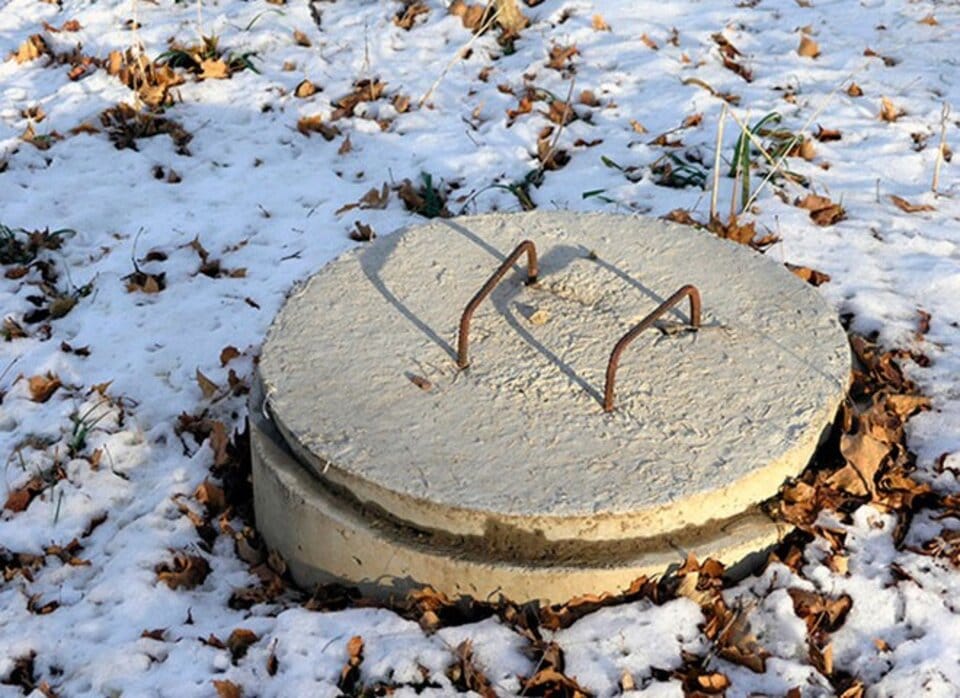
· Tank lids, risers, pump chambers, and related components
· The outlet line, which carries effluent from the tank toward the soil treatment area
· Pressure or distribution lines
· Distribution boxes, where present
· Shallow components in or near the soil treatment area
Problems become more likely when wastewater does not move or drain as intended.
A normally occupied home also sends relatively warm wastewater into the system throughout the day. That is one reason second homes and cabins that sit mostly unused during the winter can be more vulnerable.
Snow Can Actually Help Protect Your Septic System
Snow is not necessarily bad for your septic system. An undisturbed layer of snow can insulate the ground and help protect shallow components from extreme cold.
The bigger concern is removing or heavily compacting that snow.
Avoid repeatedly driving, parking, plowing, or operating ATVs or snowmobiles over the septic system and soil treatment area. When plowing, also avoid repeatedly crossing the
system, blocking access to septic tank risers, or placing snow where spring melt will be concentrated toward the soil treatment area.
Do You Need to Pump Your Septic Tank Before Winter?
Not simply because winter is coming.
Pumping should be based on the condition and use of the system, tank size, household occupancy, maintenance history, permit requirements, and the amount of solids accumulating in the tank.
Both Jefferson County and Park County emphasize regular septic maintenance rather than a blanket “pump every fall” rule. Park County’s homeowner guidance says a septic tank serving a full-time residence should generally be pumped every two to four years, depending on what enters the tank, and recommends annual inspection of solids accumulation.
If your tank is due for pumping, winter approaching is not a reason to postpone needed maintenance. If it is not due, there is generally no reason to pump it solely because temperatures are dropping.
Second homes require more individual consideration. A property that will sit unused for much of the winter may have very different conditions from a year-round residence. Pumping may be part of the winter plan in some circumstances, but pumping the tank by itself should not be treated as complete winterization.
Fix Slow Leaks — and Don’t Leave a Faucet Running
One of the less obvious causes of winter septic problems is a small, continuous flow of water.
A leaking toilet or dripping faucet can allow water to move slowly through a cold inlet line. Instead of moving through as a larger discharge, that small amount of water may cool and freeze. More water follows, freezes behind it, and the buildup can eventually restrict or completely block the line.
That is why small leaks should be dealt with before prolonged cold weather arrives.
For the same reason, do not leave a faucet running continuously in an attempt to keep the septic system from freezing.
Advice about leaving water running is sometimes used to protect a home’s water-supply plumbing, but the septic side of the house works differently. Continuously sending a small
stream into the septic system can contribute to freezing and unnecessarily load the system.
For an occupied home, use water normally and spread high-volume uses out rather than intentionally running extra water through the septic system.
Second Homes and Cabins Need a Different Winter Plan
We have a lot of second homes throughout Evergreen, Conifer, Pine, Bailey, and the surrounding mountain communities, especially South Park, and they deserve some additional attention before winter.
When a house sits unused for long periods, there is little warm wastewater moving through the system. A leaking toilet or faucet can make matters worse by creating the exact kind of slow, continuous flow that is more likely to freeze in a vulnerable line.
The right winter plan depends on the system itself, particularly if it includes pumps, pressure distribution, drip components, advanced treatment equipment, or other controls.
Do not shut down, bypass, drain, or reprogram septic equipment simply because the house will be empty unless that is part of the approved procedure for that particular system. Follow the system’s permit, manufacturer instructions, and service-provider recommendations.
If you are unsure what type of system you have or where its components are located, getting that figured out before winter is considerably easier than trying to do it during a freeze-up. Call us and we can help get you straightened out before winter arrives.
Check Pumps and Septic Alarms Before Winter
If your system uses a pump, winter preparation should include making sure the pump and alarm system are operating properly.
Some pressure distribution systems are designed so the effluent drains back after a pumping cycle rather than remaining in shallow or exposed lines where it can freeze. If a line that is supposed to drain back holds effluent because of improper slope, a low spot, an obstruction, or another problem, that standing effluent can become a freeze point.
Requirements vary by county and system design. In Park County, for example, OWTS regulations require pump or siphon discharge piping to be protected from freezing either by burial below frost level or by slope that allows the line to drain back to the pumping or siphon chamber.
The regulations also require drainage features, such as drainage through the pump bottom or a weep hole before the line leaves the tank, and air/vacuum release valves at high points when needed so the line can drain properly.
Homeowners should not change pump settings or controls simply to address a winter problem.
A high-water alarm should also never be silenced and ignored. It can indicate a pump problem, excessive water level, frozen discharge line, electrical issue, or another condition that needs to be diagnosed.
What Should You Do If Your Septic System Freezes?
First, do not assume every winter backup is caused by a frozen line.
Slow drains, gurgling, sewage backing up, a high-water alarm, unusual pump operation, or recurring cold-weather problems can have several causes. The important first step is determining where the problem actually is.
If sewage is backing up into the house, a high-water alarm is active, wastewater is surfacing outside, or the system suddenly stops accepting wastewater during cold weather, call South Platte Services immediately.
While you are waiting for service, reduce unnecessary water use. Avoid laundry, long showers, running the dishwasher, or other high-volume discharges that could make a backup worse.
In many cases, we can professionally thaw a frozen septic line. But thawing the line only solves the immediate problem. We also want to understand why it froze in the first place.
Possible causes include improper inlet or outlet line slope, a sag or low spot in a line, shallow burial, inadequate insulation or soil cover, insufficient drain-back, very low winter use, or problems with pumps and controls.
Do not attempt to thaw the system by adding salt, automotive antifreeze, septic additives, or other chemicals. Do not build a fire over the system, and do not continuously run water in an attempt to thaw it. Never enter a septic tank or pump chamber.
If correcting the underlying problem requires excavation, replacement, or alteration of the septic system, county permitting and inspection requirements may apply.
Know Where Your Septic System Is Before the Snow Arrives
It is much easier to locate a septic tank before snow cover and frozen ground make access more difficult.
If you have your septic permit, as-built drawing, or other system records, keep them somewhere accessible. Ideally, you should know the location of the tank and risers, inlet and outlet lines, pump chamber if applicable, and soil treatment area.
In Jefferson and Park Counties, septic permits and available system records may also be obtainable through county OWTS records or public-record requests. Records for older systems are not always complete, but they are a good place to start.
Knowing the layout helps with plowing, parking, equipment traffic, snow storage, landscaping, and future construction around the system. If you can’t locate the system from the available records, South Platte Services can help determine the next step.
When Winter Problems Keep Coming Back
One freeze during an unusually severe stretch of weather does not necessarily mean there is a major problem with the septic system.
Repeated freezes are different.
If essentially the same line freezes every winter, there is usually a reason that location is vulnerable. Thawing it gets you operating again, but recurring problems deserve a closer look at the installation, drainage, system components, and how the property is being used.
South Platte Services has served Colorado’s mountain communities for more than 50 years. When a winter septic problem occurs, our goal is not simply to thaw the line and leave. We want to determine where it froze, why it froze, and whether there is something we can do to reduce the chance of it happening again.
If your system freezes, your septic alarm comes on, or you want help understanding your system before winter arrives, call South Platte Services. We’re here to help.