
Root Intrusion in Septic Lines: Signs, Causes, and When a Line Needs Repair
Tree roots and buried septic lines don’t always coexist peacefully.
And during a dry Colorado summer, that relationship can become even more problematic.
We’ve seen an unusually high number of root-related septic-line problems in our mountain communities this summer. Across areas like Evergreen, Conifer, Bailey and Pine, dry conditions combined with mature trees and established septic systems can create particularly challenging conditions for buried wastewater lines.
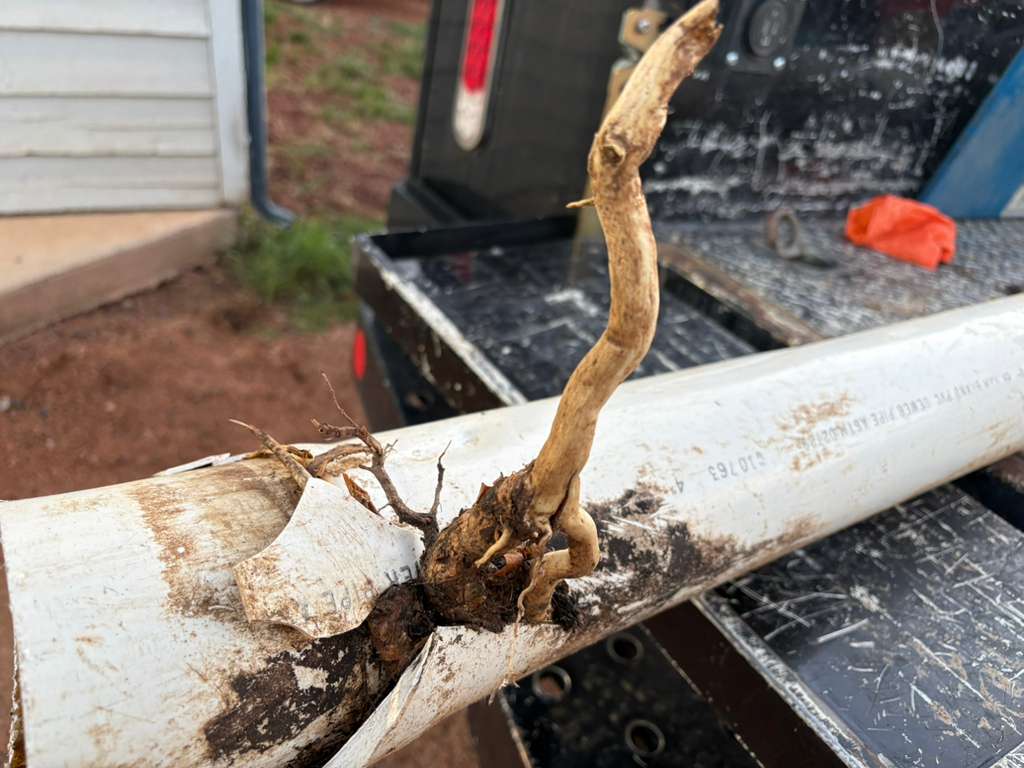
During prolonged dry periods, tree and shrub roots seek dependable sources of moisture. A wastewater line can provide exactly that, particularly when a crack, failed joint, separation or other defect gives roots a way inside.
For homeowners, the important thing to understand is that the roots themselves are only part of the problem.
If roots are growing inside a septic line, there’s an opening somewhere that allowed them to get there.
Clearing the roots may restore flow, but it doesn’t repair that opening. That’s why the important questions aren’t simply, “Are there roots in the line?” or “Can we get them out?”
They’re “How did the roots get in, and what condition is the pipe actually in?”
After more than 50 years of working on septic systems in Colorado’s mountain commu
nities, we’ve learned that answering those questions is the key to determining the appropriate long-term solution.
How Do Roots Get Inside a Septic Line?
A common misconception is that tree roots simply grow through the wall of an otherwise healthy pipe.
More often, roots take advantage of an opening that’s already there, such as a deteriorated joint, crack, failed seal, offset connection, or damaged section of pipe.
Fine roots can enter surprisingly small openings. Once inside, they have access to a dependable source of moisture and nutrients and can continue to grow.
Older piping can be particularly susceptible. Clay and concrete lines, for example, may have numerous joints that become vulnerable as they age. Modern plastic pipe is generally more resistant when properly installed, but damaged or separated joints can still provide an entry point.
Dry conditions can make those existing vulnerabilities particularly attractive to moisture-seeking roots. Drought doesn’t necessarily cause the pipe defect, but it can increase the likelihood that roots find and take advantage of one that’s already there.
What Happens Once Roots Get Inside?
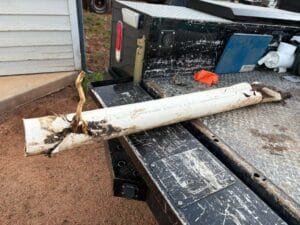
A few small roots can eventually become a substantial root mass.
As the roots grow, they reduce the usable diameter of the pipe and can catch toilet paper and other solids moving through the line. That restriction can progressively interfere with wastewater flow.
Homeowners may notice:
· Slow or intermittently clogged drains
· Gurgling toilets or drains
· A problem that returns after the line has previously been cleared
· Increasingly frequent blockages
· In severe cases, wastewater backing up into the home
Those symptoms don’t automatically mean roots are the cause. Several
septic and plumbing problems can produce similar symptoms, which is why proper diagnosis matters.
When Roots Are Found, Look at the Pipe, Not Just the Roots
Mechanical root cutting can be an effective way to remove an obstruction and restore flow through a septic line.
But it’s important to understand what that accomplishes and what it doesn’t.
Clearing the roots addresses the obstruction inside the line. It doesn’t repair the opening that allowed the roots to get there.
If roots entered through a crack, failed joint, separation, or other defect, that defect remains after the roots have been removed. As long as the opening remains, roots may eventually find their way back into the line.
That’s why we generally recommend looking beyond the root mass itself.
Once the line can be properly inspected, a camera can help identify where the roots are entering and evaluate the condition of the surrounding pipe. If there’s a repairable defect, correcting that defect can provide a more permanent solution than repeatedly removing roots as they grow back.
Root cutting can still serve an important purpose. It may be necessary to restore flow, allow the line to be properly inspected, or keep the system functioning until a repair can be completed.
But recurring root intrusion is a strong reason to investigate what’s happening with the pipe rather than repeatedly treating the obstruction alone.
Repair Doesn’t Necessarily Mean Replacing the Entire Line
Finding a defect doesn’t automatically mean excavating and replacing the entire septic line.
This is where a camera inspection, and someone who’s looked at a lot of these lines, can make a significant difference.
A camera inspection allows us to evaluate visible roots along with the apparent condition of the pipe. We may be able to identify: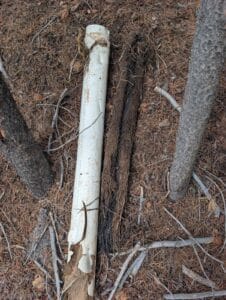
· Cracks or breaks
· Offset or separated joints
· Pipe deformation
· Standing water
· Deterioration
· Specific locations where roots are entering
Sometimes the problem is isolated to a single joint or relatively short section of pipe. In those situations, a targeted repair may address the problem without replacing the entire line.
Other times, particularly with older piping, multiple failed joints, severe cracking, extensive deterioration or a collapsed section may make a larger repair or replacement the more practical long-term solution.
The recommendation should depend on what the inspection shows, not simply on the fact that roots were found.
The goal isn’t to automatically recommend the biggest repair. It’s to understand what’s happening underground and recommend a solution appropriate to the actual condition of that line.
What About Chemical Root Killers?
Homeowners sometimes ask about chemical products designed to kill or control roots growing inside sewer lines.
Those products shouldn’t be treated as a universal solution, particularly when the line is connected to an onsite septic system rather than a municipal sewer system.
A septic system relies on naturally occurring biological activity to help break down waste. Depending on the product and how it is used, introducing unnecessary chemicals into the system can interfere with that process.
For that reason, we don’t recommend simply adding a chemical root-control product to a septic system without first determining whether the product is appropriate for that particular system and situation.
There’s another limitation that’s just as important:
Killing roots inside a pipe doesn’t repair the opening that allowed them inside.
Even if a treatment reduces root growth temporarily, a crack, failed joint or separation in the line is still there.
The better approach is to determine where the roots are entering, evaluate the condition of the pipe and decide what, if anything, needs to be repaired.
Can Root Intrusion Be Prevented?
You can’t eliminate every possibility of root intrusion, especially on mountain properties with mature trees and older buried piping. But there are ways to reduce the risk.
Keep trees and shrubs an appropriate distance from known septic lines, tanks and drainfields, and avoid planting trees or shrubs directly over a drainfield.
It’s also helpful to know where your septic lines and other system components are located before adding landscaping.
If you’ve already had roots cleared from a line and the problem returns, a camera inspection can help identify why they’re getting in rather than repeatedly clearing the same obstruction without evaluating the pipe.
Recurring roots are telling you something. Finding the entry point can help determine whether a targeted repair will prevent the problem from continuing.
Frequently Asked Questions About Roots in Septic Lines
Can tree roots get into a healthy septic pipe?
Tree roots generally enter through an existing opening in the line, such as a crack, failed joint, separation or damaged connection. Properly installed pipe in good condition is much more resistant to root intrusion. If roots are found inside a septic line, it’s important to determine where they’re entering and evaluate the condition of the pipe.
Can roots be removed without replacing the septic line?
Yes. Mechanical root cutting can remove roots and restore flow without replacing the entire line. However, removing the roots doesn’t repair the opening that allowed them inside. A camera inspection can help determine whether the problem can be addressed with a targeted repair or whether more extensive work is appropriate.
Will roots grow back after a septic line is rooted?
They can. If the crack, failed joint or other opening that allowed the roots into the line remains, roots may eventually return. That’s why repeatedly clearing roots without evaluating the condition of the pipe may address the obstruction without addressing its underlying cause.
Are chemical root killers safe for septic systems?
Not every root-control product is appropriate for an onsite septic system. Septic systems rely on biological activity to help break down waste, and some chemicals can interfere with that process. Before using a chemical root-control product, homeowners should make sure it’s appropriate for their particular septic system. Chemical treatment also doesn’t repair the crack, failed joint or other opening that allowed roots into the line.
Experience Matters Underground
Septic systems aren’t new to Colorado’s mountain communities, and neither are tree roots.
South Platte Services has been serving our mountain communities for more than 50 years, and root intrusion is one of the many problems we’ve encountered throughout that history.
When roots are found inside a septic line, getting wastewater flowing again is important. But it’s only part of the job.
The next step is understanding how the roots got there, evaluating the condition of the pipe and determining whether a repair is appropriate and, if so, how extensive that repair actually needs to be.
Clearing the roots addresses the immediate obstruction. Identifying and correcting the underlying pipe problem is what can keep it from becoming a recurring one.
If you’re experiencing recurring slow drains, backups, or other signs of a possible septic-line obstruction, South Platte Services can inspect the problem and help determine the appropriate next step.
Serving our mountain communities for over 50 years.🏔