
Septic pumping in the foothills involves conditions most suburban service providers rarely encounter.
South Platte Services provides septic tank pumping, Transfer of Title inspections, and septic maintenance support throughout Evergreen and the surrounding foothills.
We’re not dispatching trucks from Denver. Our crews already work these roads every day and know the properties, access conditions, and seasonal realities that come with septic service in mountain communities.
Between steep driveways, buried lids, and missing county records, mountain septic service rarely matches the original property blueprints. On some larger properties around Soda Creek or parts of Marshdale, the challenge is less about finding the tank and more about whether the truck can safely get close enough to reach it.
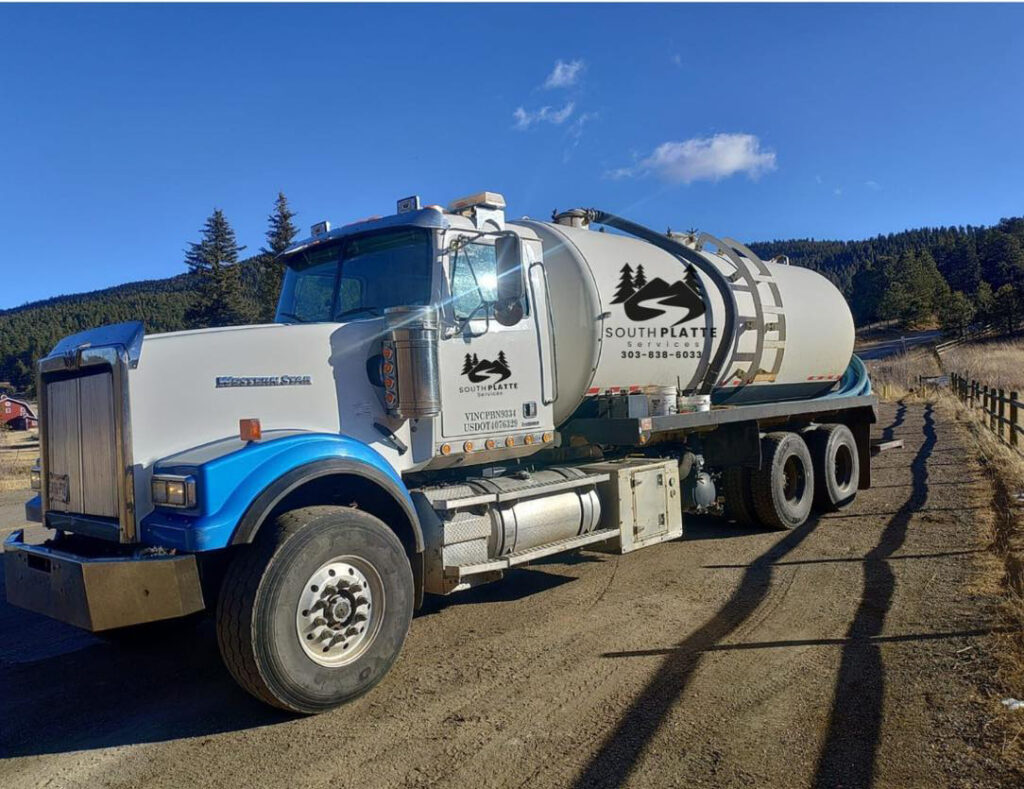
Most pump trucks carry about 150 feet of hose. If the truck cannot safely get close enough because of soft shoulders, steep grades, retaining walls, or access limitations, pumping may not be possible until conditions improve. Some steep or heavily wooded foothill properties also require longer hose runs or staged pumping setups that are uncommon in flatter suburban service areas.
If you’re not sure whether your property is ready for service or what to expect, we’re glad to talk through it before scheduling.
Call 303-838-6033 to schedule septic pumping or discuss your property.
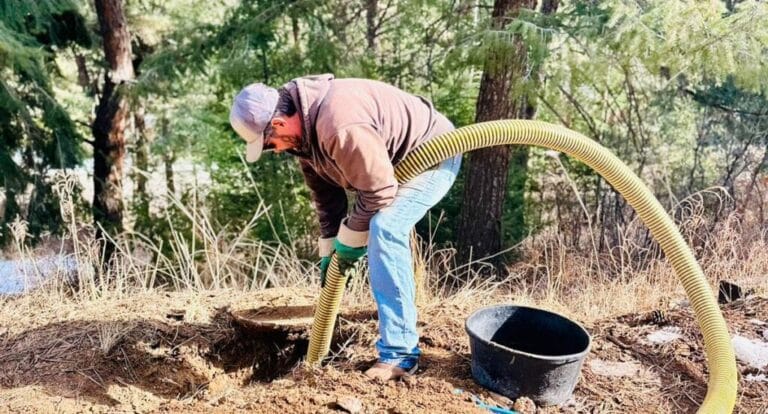
Septic Pumping in Evergreen Is Different
Many septic systems throughout Evergreen are older, difficult to access, or located on properties that were not originally developed with straightforward service access in mind.
We’ve pumped tanks at properties that do not appear correctly on GPS, worked through sudden October snowstorms, and serviced systems where decades of landscaping buried the lids completely.
Some older properties back in Kerr Gulch, Upper Bear Creek, and parts of Brook Forest still involve systems that no longer fully match the original records after decades of additions, remodels, or undocumented changes.
Seasonal occupancy patterns also change how systems behave. A system that functions normally through summer may develop frozen lines, alarm conditions, or access problems after sitting vacant through part of the winter.
Spring thaw can create a separate set of problems. Roads that were solid in the morning sometimes soften enough by afternoon to create traction or shoulder stability concerns for heavier trucks.
Septic Pumping Services
A routine pumping visit often tells us a lot about how a system has been behaving.
While the lids are open, we check the baffles, the operating level, and the integrity of the tank. If the system has an effluent filter, we pull and clean it as part of the service.
Some mountain properties run pressure distribution systems or advanced treatment components, setups that have their own maintenance requirements and do not always behave the same way a standard gravity-fed tank does.
Some advanced systems also require ongoing inspection, monitoring, or operational documentation depending on the type of system and county requirements.
If you cannot remember the last time your tank was pumped, it is probably time to schedule service.
“These guys will set up automatic inspections and pumping based on their findings, couldn’t ask for better service!!” – Derek S
Jefferson County Transfer of Title Inspections
Jefferson County requires Transfer of Title inspections and use permits for many OWTS systems prior to closing, particularly for systems installed more than five years before the sale date.
Many homeowners are dealing with older systems, incomplete records, buried access lids, or uncertainty about the condition of the system while already working against closing deadlines.
These inspections often involve:
- Digging up and exposing buried lids before the inspector arrives
- Locating unmapped tanks on older mountain properties
- Coordinating the timing between the pump truck and licensed inspector
- Pulling available county OWTS records and identifying what is not in the file
- Identifying whether additional evaluation may be needed before closing
For homeowners, buyers, and Realtors trying to understand county timelines, OWTS requirements, or inspection expectations, we also maintain a detailed Jefferson County septic requirement resource.
Preparing for Septic Pumping or Inspection
A few things tend to slow down or complicate a pumping visit that are worth knowing about ahead of time.
Steep or narrow driveway access, snow and mud conditions, buried lids, incomplete or non-existent system records, overhead tree clearance, gate access, limited turnaround space, and parking restrictions near the tank location all affect how service gets planned in the foothills.
In winter conditions, plow berms, packed snow, frozen access areas, and limited daylight sometimes affect whether trucks can safely reach the property.
If there is anything unusual about the property, it usually helps to mention it before scheduling.
Older Systems, Buried Lids & Unknown Tank Locations
Many Evergreen-area properties were built decades ago, and not every system has complete records or clearly marked access points.
Buried lids, systems that have been modified over the years, and layouts that no longer match the original records are common enough in the foothills that locating work sometimes has to happen before the pump truck can do anything.
Issues Commonly Identified During Pumping & Inspection
Slow drains, backups, odors, alarms, soggy areas, or unusual system behavior sometimes show up after long vacant periods, freeze-thaw swings, or years of deferred maintenance on older mountain properties.
On older foothill properties, routine pump-outs sometimes uncover crushed lines, backed-up fields, filters clogged after years without maintenance, or systems that have slowly drifted away from their original design over time.
Not every issue discovered during pumping or inspection leads to major repair work.
If additional work appears necessary, we’ll explain what was found and whether additional evaluation or repair work is likely needed.
Frequently Asked Questions
How often should a septic tank be pumped in Evergreen?
Pumping frequency depends on household size, tank size, water usage, and system condition. Many residential systems are pumped every 3 to 5 years, though some properties require more frequent service.
What if I do not know where my septic tank is located?
That is common in older mountain properties. Buried lids, undocumented tank locations, and incomplete records are something we regularly encounter throughout Evergreen and the foothills.
Do I need a Transfer of Title inspection before selling my home?
In many cases, yes. Jefferson County requires use permits and inspections for many OWTS systems prior to sale, especially for systems installed more than five years before closing.
What happens if the inspection finds a problem?
If issues are identified, we’ll explain what was found, what the next steps usually involve, and whether additional evaluation may be necessary.
Schedule Septic Pumping in Evergreen
Need septic pumping, a Transfer of Title inspection, or help preparing your property for septic service in Evergreen?
If you’re unsure what condition your system is in, whether your property is ready for pumping, or what Jefferson County requires for your situation, we can walk through the process before scheduling work.