
Most septic problems in Evergreen start small. Regular inspection is usually what catches them before they turn into larger repairs.
South Platte Services provides septic inspections, preventative maintenance, system troubleshooting, and repair coordination throughout Evergreen and the surrounding foothills. We’ve been working on mountain septic systems in these communities for more than 50 years, and the realities are different here than they are on flatter Front Range properties.
If your system hasn’t been evaluated in a few years, is showing early warning signs, or you’re preparing a property for sale, it usually helps to get eyes on the system before a smaller issue becomes a larger one.
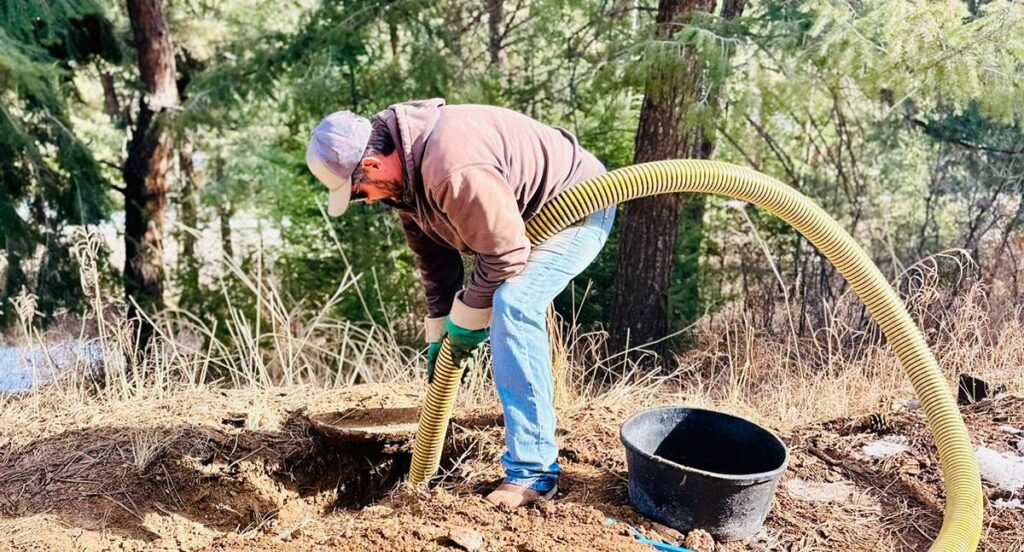
Why Septic Inspection Matters in the Foothills
Mountain septic systems deal with conditions many suburban systems never encounter.
Freeze-thaw cycles, groundwater movement, steep grades, shifting soils, rocky terrain, and aging infrastructure all affect how systems perform over time — especially on older Evergreen properties where a system may have been running for decades without a full evaluation.
Many mountain properties were built decades ago, and in some cases system records, tank locations, or original installation details are incomplete or missing entirely. Some older properties in Brook Forest and Upper Bear Creek have had additions, undocumented repairs, or buried components that no longer fully match county records.
On wooded foothill properties, lids sometimes end up buried under years of pine needles, landscaping, snow accumulation, added fill, or natural ground movement. Locating and exposing the system can become part of the inspection process itself.
Shallow soils and bedrock also affect how systems behave in the foothills. In some areas around Evergreen, limited usable soil depth changes how a soil treatment area (STA) handles water and can complicate both excavation access and future replacement planning.
That makes routine inspection more important here than it is in newer suburban developments where systems are usually easier to access and better documented.
What a Septic Inspection Covers
A septic inspection in Evergreen often starts before the tank is even opened.
On older foothill properties, part of the work can involve locating buried lids, identifying undocumented modifications, understanding how water moves across the property, and evaluating whether terrain, runoff, or access conditions may be contributing to the issue.
Once the system is exposed, we evaluate overall tank condition, baffles, effluent filters, operating levels, and any accessible advanced-system components such as pumps, alarms, or dosing equipment.
We’re also looking for the kinds of problems that show up regularly on mountain properties — root intrusion, restricted flow, deteriorating concrete components, wet areas near the soil treatment area, or signs that groundwater and runoff are affecting system performance during wetter parts of the year.
On heavily wooded foothill properties, we regularly find root intrusion well outside the immediate tank area, especially where older lines run near mature pines and aspens.
If something looks concerning, we explain what we’re seeing and what the next steps typically involve before recommending any work.
We focus on identifying the actual source of the problem rather than jumping straight to excavation or replacement recommendations. If a system is functioning well, we’ll tell you that. If something needs attention, we’ll explain what the options usually look like and how Jefferson County requirements may factor into the next steps.
“These guys will set up automatic inspections and pumping based on their findings, couldn’t ask for better service!!” – Derek S
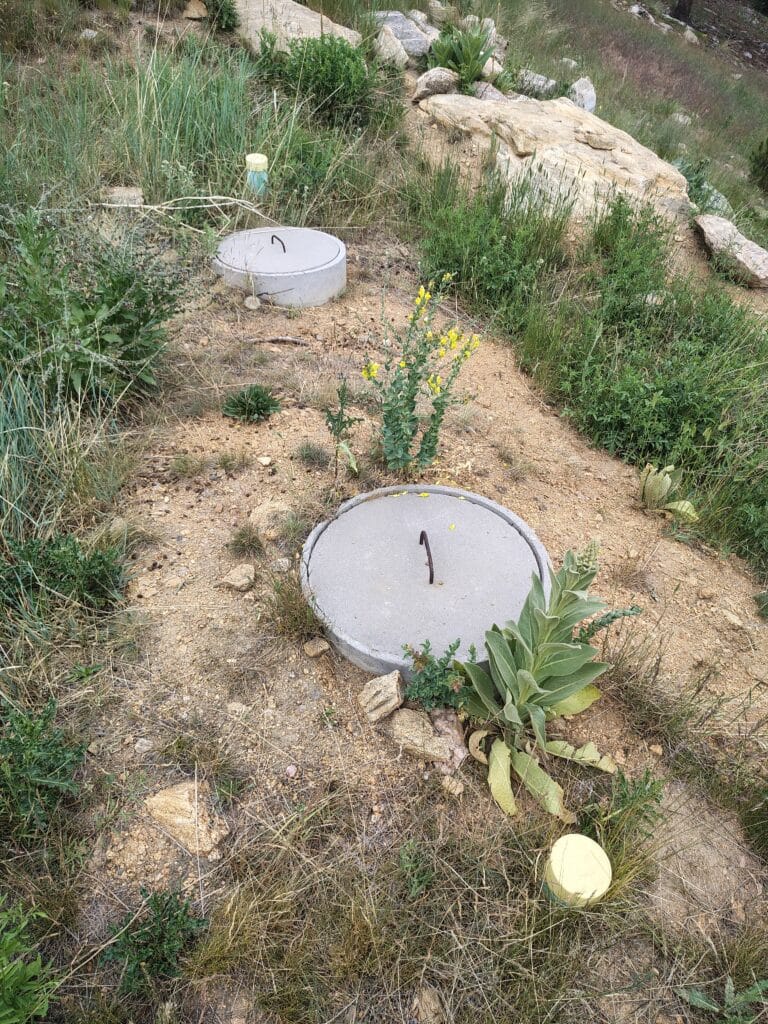
Common Issues We Find on Evergreen Properties
The most common issues we encounter on Evergreen properties are root intrusion into sewer and lateral lines, deteriorating baffles and concrete tank components, restricted flow from aging infrastructure, and buried or difficult-to-access systems on older properties.
On steeper foothill terrain, we also regularly see freeze-related issues in buried lines, groundwater infiltration affecting operating levels, and systems with undocumented layouts that take time to fully understand before repair work can even begin.
Some systems appear stable during dry summer conditions but begin showing symptoms during spring thaw or periods of heavier groundwater movement. Slow drains, unusually wet or persistently damp areas around the soil treatment area, sewage odors outside, recurring backups, or gurgling fixtures are all worth evaluating before the system becomes more stressed.
Mountain driveways and tight access areas also create problems people do not always anticipate. We’ve seen shallow lines crushed by delivery trucks, propane service vehicles, or equipment staging during construction projects on narrow foothill properties.
Preventative Maintenance
Inspection is most valuable when it’s routine rather than reactive.
For most Evergreen residential properties, having the system evaluated every few years alongside regular pumping gives a clearer picture of overall system health and whether anything is developing that warrants attention.
In the foothills, many homeowners do not discover developing septic problems until spring runoff, changing weather conditions, access limitations, or a property sale forces a closer look at the system.
Seasonal-use mountain homes can create additional issues. Systems that sit unused for long periods during winter sometimes develop freeze-related problems, low-flow issues, or frozen sections in lightly used lines that are not always obvious until the property becomes active again.
Older properties, advanced treatment systems, seasonal-use homes, and systems with heavier usage may benefit from more frequent evaluation.
We track system condition over time and help homeowners stay ahead of the kind of deferred maintenance that eventually becomes emergency work.
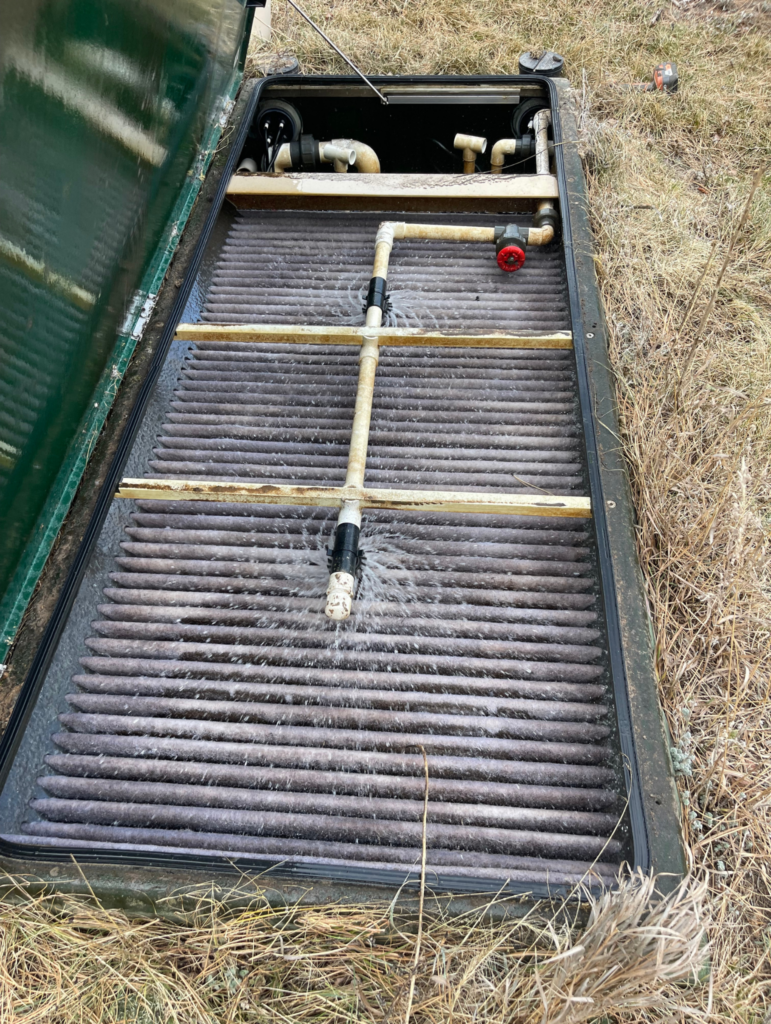
Advanced Treatment Systems & O&M Agreements
Many Evergreen properties use advanced or engineered OWTS systems that require ongoing monitoring and maintenance documentation beyond standard pumping schedules.
Jefferson County typically requires proof of an active O&M agreement for these systems, particularly during property transfers.
When Inspection Leads to Repair
If an inspection reveals something that needs attention, we explain what we found, what the options typically involve, and whether additional county review or permitting may be required before work begins.
In Evergreen, repairs often involve more than simply replacing a component. Steep terrain, rocky soils, limited excavation access, buried infrastructure, and older undocumented systems can all affect how repairs need to be approached.
A repair visit may involve tracking down root intrusion, diagnosing a restricted sewer line, exposing buried components, coordinating excavation access, replacing deteriorated risers or baffles, or evaluating whether the soil treatment area is handling water correctly.
For repairs involving excavation, component replacement, or system modification, we also help homeowners navigate Jefferson County OWTS requirements and inspection processes.
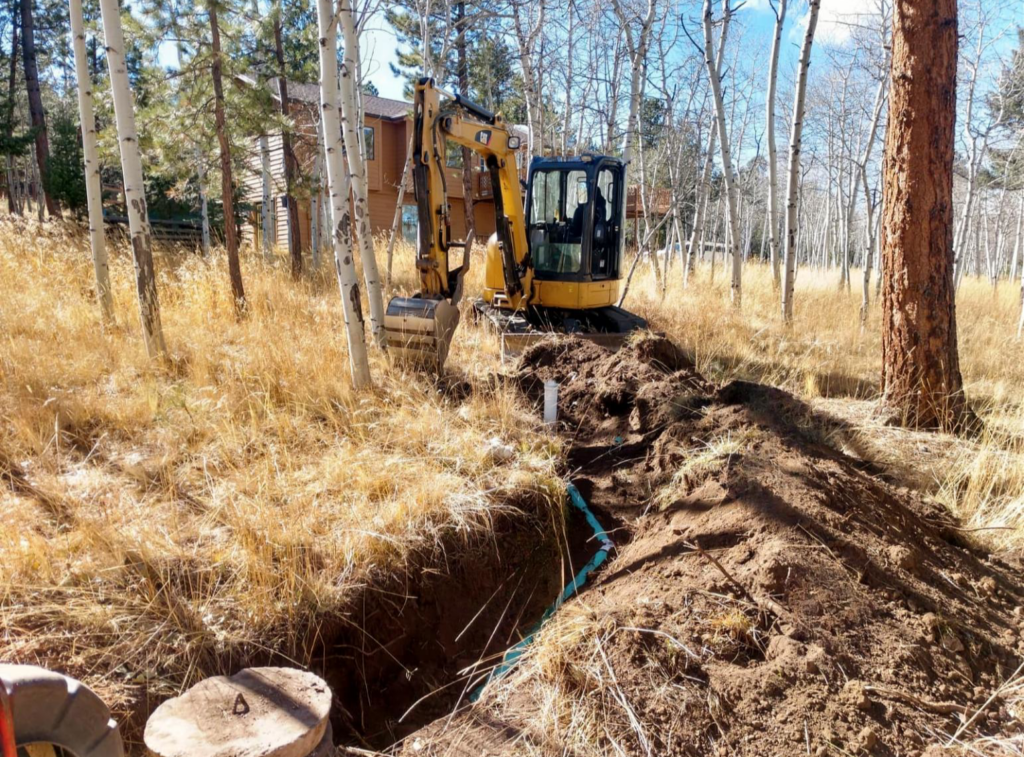
What Makes Septic Work in Evergreen Different
The foothills throw different kinds of stress at septic systems than flatter suburban properties deal with.
We’ve worked on systems where lids were buried under years of landscaping and duff, where original tank locations no longer matched county records, and where steep terrain limited excavation access entirely.
A property near Evergreen Lake behaves very differently from a steep wooded property farther up in Brook Forest or Upper Bear Creek. Snowpack, runoff patterns, slope, tree cover, groundwater movement, and access conditions all affect how systems perform and how service work needs to be approached throughout the year.
On some hillside properties around Shadow Mountain and Soda Creek, runoff and perched groundwater can make a system appear stable during dry conditions but expose problems quickly during spring thaw or wetter periods.
That kind of terrain behavior is rarely a major consideration on flatter suburban Front Range properties — but it matters regularly in the foothills.
Selling a Home in Evergreen? Jefferson County Has Specific Requirements.
If you’re selling a property served by a septic system in Jefferson County, a Transfer of Title inspection and Use Permit are typically required before closing.
This is a separate process from routine maintenance and involves specific county documentation, pumping requirements, approval timelines, and inspection sequencing that can directly affect closing schedules.
Many homeowners and agents do not realize how often buried lids, incomplete records, advanced treatment components, or undocumented modifications create delays once a property goes under contract.
We work with homeowners and real estate agents throughout Evergreen and the foothills to navigate Jefferson County’s Transfer of Title requirements — and we understand what commonly slows the process down, what the county needs to see, and why agents who have been through it before usually schedule inspections shortly after listing rather than waiting until the contract is signed.
Frequently Asked Questions
How often should a septic system be inspected in Evergreen?
For most residential properties, every two to three years alongside regular pumping gives a good picture of system health. Older systems, advanced treatment systems, and higher-usage properties may benefit from more frequent evaluation.
What are signs that a septic system needs inspection?
Slow drains throughout the home, recurring backups, sewage odors, unusually wet or persistently damp areas around the soil treatment area, spring snowmelt problems, or a system that hasn’t been evaluated in several years are all worth addressing.
Do you inspect advanced or engineered septic systems?
Yes. Many Evergreen properties have advanced OWTS systems that require additional maintenance, monitoring, and active O&M agreements.
Jefferson County often requires proof of an active O&M agreement for these systems, particularly during property transfers.
What happens if the inspection finds a problem?
We explain what was found and what the options typically look like before recommending any work. Most problems are significantly easier to address before the system becomes more stressed or a property sale is already underway.
If issues are identified, we’ll explain what was found, what the next steps usually involve, and whether additional evaluation may be necessary.
Do I need a septic inspection to sell my home in Jefferson County?
In most cases, yes. Jefferson County typically requires a Transfer of Title inspection and Use Permit for OWTS systems prior to closing.
Can inspection and pumping happen during the same visit?
Sometimes. While inspections and pumping are often coordinated together, they don’t always need to happen during the same appointment. South Platte Services uses dedicated inspection and pumping teams so we can recommend the right approach based on the system, property conditions, and what you’re trying to accomplish.
What if I don't know where my septic system is located?
That’s common on older mountain properties throughout Evergreen and the foothills. Buried lids, undocumented repairs, incomplete records, and older installations are something we encounter regularly.
When available, we often start with county records, historical system information, and anything the homeowner already knows about the property. Because we’ve worked in these communities for more than 50 years, there are cases where prior service history or local familiarity helps shorten the process.
If records don’t tell the full story, our service team can perform septic locating to help identify tank locations, lids, and accessible system components so we can determine the next best step.
Schedule a Septic Inspection in Evergreen
If your system hasn’t been evaluated recently, is showing early warning signs, or you’re preparing a property for sale, call us and we can usually sort out what’s needed fairly quickly.
South Platte Services provides septic inspections and maintenance throughout Evergreen, Bergen Park, Brook Forest, Hiwan, Evergreen Meadows, Upper Bear Creek, Shadow Mountain, Soda Creek, and surrounding foothill communities throughout Jefferson County.
After more than 50 years working on mountain septic systems, we’ve learned that most inspection visits start with understanding the property itself — terrain, access, drainage patterns, system history, and what the homeowner has been noticing long before a tank lid is opened.