
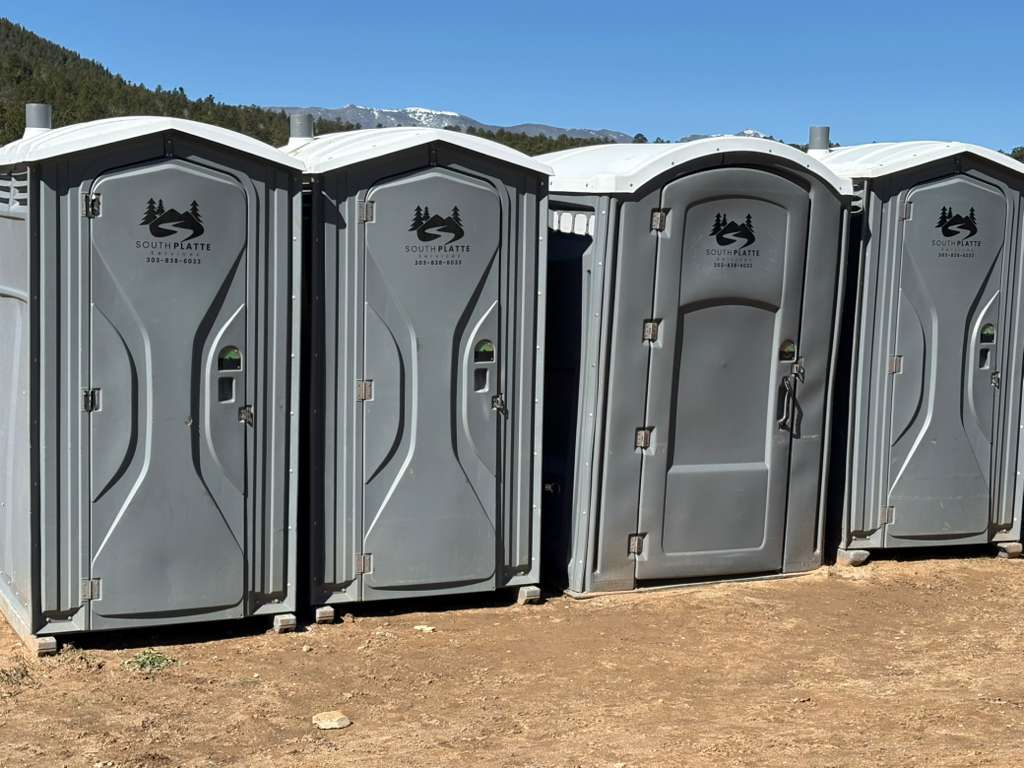
Portable Restroom Planning for Outdoor Events in Colorado’s Mountain Communities
Most of the event calls we get up here come two weeks before setup day. The ones that go smoothest usually start a month earlier. We’ve been setting up restrooms for weddings, rodeos, trail races, and neighborhood gatherings on these roads for more than a decade — and the difference between a smooth event and a stressful one almost always comes down to how early the logistics conversation started.
Once people are onsite, placement, access, and crowd flow usually matter more than the formula itself.
How Many Portable Restrooms Do You Actually Need?
Headcount helps, but it usually doesn’t tell the whole story.
Event duration, alcohol service, whether guests are staying onsite, and how people move through the venue all affect restroom demand in ways a simple formula doesn’t catch. We’ve worked enough events up here to know that the organizers who get the count right are the ones thinking about crowd behavior — not just guest totals.
As a baseline:
- 1 standard unit per 50–75 guests for shorter events
- Additional units for events running more than 4–6 hours
- Increased capacity if alcohol is being served — especially events with active bars or beer gardens
- Separate handwashing stations for food service areas
- At least one ADA-accessible unit for most events — federal standard is one accessible unit per 20 standard units, and it’s a legal requirement, not a preference
A wedding with 150 guests behaves very differently than a youth baseball tournament with 150 people rotating through multiple fields all day. Festivals and concerts create concentrated usage spikes during intermissions and meal breaks that headcount alone doesn’t predict.
One thing we see consistently: alcohol changes demand faster than most organizers expect. Up here, altitude adds to it — alcohol dehydrates faster at elevation, which accelerates restroom usage beyond what the standard formula accounts for. The biggest planning mistake is almost never having too many units. It’s underestimating how hard a small number of units will work based on how the crowd actually moves.
Why Placement Causes More Problems Than Unit Count
Most event restroom problems up here aren’t about the number of units.
Placement and guest flow are where issues tend to show up first. People naturally cluster around food, drinks, music, shade, seating, and parking. If the restrooms are a long walk from those areas, guests notice quickly — and on uneven mountain terrain, a long walk feels a lot longer than it looks on a site map.
A few things we see regularly at foothill events:
- Units placed downhill or across uneven terrain from the main gathering area
- Bottlenecks during peak periods when a small number of units handles most of the traffic
- No lighting near units for evening events
- Handwashing stations missing near food vendors
- Placement plans that made sense two weeks out but stopped making sense once tents, vendors, and parking shifted
That last one happens often at mountain venues where setup evolves throughout the day. We’ve shown up to service events where the restrooms ended up 200 feet from where they were supposed to go because the parking plan changed. Restroom placement planned early can end up in the wrong spot once everything else lands.
Sometimes moving units 30 feet solves more problems than adding two more.
Need help calculating the number of units needed for your event?
Mountain Event Logistics Are Different
This is usually where foothills events start getting more complicated than they looked on paper.
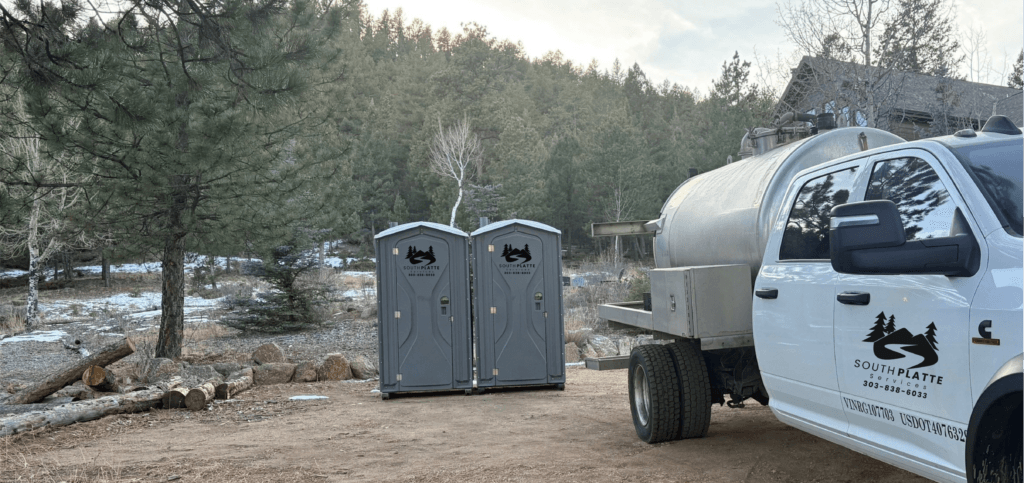
A placement area that works for a pickup truck doesn’t always work for a loaded service truck. We’re based out of Pine and already running these roads every week for septic, trash, and event service — so around Conifer, Bailey, and the smaller foothills roads we know well, access and turnaround space become part of the planning conversation pretty quickly. We’d rather work through the site with you before delivery day than show up and find a problem we could have solved on the phone.
Some of the site realities we run into regularly:
- Steep gravel driveways with limited turnaround space
- Soft shoulders and narrow gate access
- Tree clearance that limits approach angles
- Ground that firms up overnight but softens quickly after afternoon rain
- Sloped placement areas that require leveling
- GPS coordinates that don’t reflect the actual site access point
- Exposed ridge locations where wind affects unit stability and placement orientation
Portable restrooms need level ground to sit and service safely. On sloped sites, units get leveled before they’re set, which affects where they can realistically go. That’s a conversation worth having before the truck leaves the yard.
If there’s a septic system or leach field on the property, knowing where it is before we arrive matters. We’ve seen what happens when a loaded service truck parks over a leach field. It creates a much larger problem than the event itself — and on older mountain properties, the system isn’t always where the records say it is.
Rain also changes conditions quickly up here. A placement area that feels firm during morning setup can become difficult to reach for servicing by mid-afternoon once weather moves through. We factor that in when we’re talking through a site. Most people planning mountain events for the first time don’t realize how much access and placement matter up here. That’s a normal starting point.
Do you need help determining the best portable toilet placement for your event?
ADA Units and Handwashing Stations
ADA-accessible units tend to get underplanned because organizers think of them as a compliance checkbox. In practice, they’re useful well beyond that — and at family events, they’re often some of the most appreciated units out there.
The additional interior space works well for:
- Guests with mobility limitations
- Parents with young children
- Older attendees who need easier access
- Guests changing clothes during weddings or sporting events
You’ll need at least one ADA unit — that’s federal law, and the minimum is one accessible unit per 20 standard units. But honestly, at most foothills events, the ADA unit ends up being one of the most used ones out there. Compliance and practicality pointing the same direction.
Handwashing stations are another area we see consistently underestimated.
At smaller backyard events, sanitizer stations may be enough. At weddings, tournaments, festivals, or food-centered events, dedicated handwashing stations matter a lot more — especially on dry summer days when dust, food service, and hours of outdoor activity add up. We’ve worked enough of these events to know that the food vendor areas without handwashing nearby are where people start complaining first.
Placement matters here too. Handwashing stations get used most when they sit naturally between restroom areas and food or drink areas — not as an afterthought at the edge of the site.
Multi-Day Events and Servicing Logistics
Multi-day events need a different planning approach, and the timeline pressure is real.
One thing we see at longer events is that usage changes fast once the crowd settles in. Saturday is almost always heavier than Friday. Weather shifts where guests gather. Alcohol service accelerates fill rates faster than anyone expects on day one. By the time you’re feeling the squeeze, solving it is harder than it would have been the day before.
For larger or multi-day events, servicing during the event may include:
- Pumping
- Restocking supplies
- Sanitizer replenishment
- Cleaning touchpoints
- Trash removal around restroom areas
All of that requires truck access during the event itself — not just on delivery day.
One thing that gets overlooked fairly often is what happens to access after setup is complete. Vendor layouts, fencing, parked vehicles, and crowd flow can unintentionally block servicing routes by the time the event is underway. At mountain venues with tighter roads and limited turnaround space, that becomes very hard to solve in the middle of an event. We try to walk through that scenario early — where will the service truck get in and out once everything is set up and running?
There’s also a practical timing reality in the foothills. If the event runs late, the units may need to hold until the following morning. That affects how capacity should be planned for the final hours of the night.
If the crowd ends up bigger than expected or the day runs long, call us and we’ll figure it out.
Contact us for help planning your multi-day event.
Wildlife, Trash, and Site Realities
At foothills events, restroom planning and waste planning usually overlap — and up here, that matters more than it does at a suburban venue.
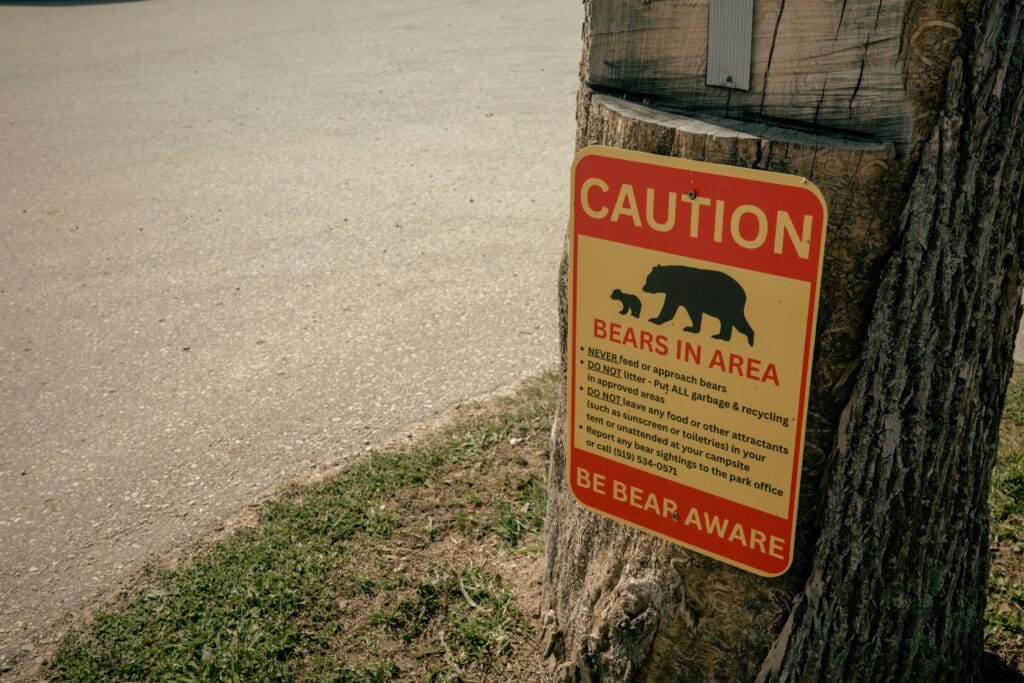
Overflowing trash near restroom areas creates problems quickly at multi-day events or venues near open space. We’ve seen what happens when food waste sits out overnight in these mountains. Bears are opportunistic, and it’s not a theoretical concern — it’s a regular operational reality for anyone running events near open space in Jefferson, Park, or Clear Creek County.
For events running late or leaving waste onsite overnight, bear-resistant trash containers are worth talking through early in the planning process. That conversation is a lot easier to have before delivery day than after something gets into the trash at 2am.
Coordinating restroom placement, trash service, recycling, and servicing access routes together — rather than treating them as separate planning items — usually leads to a smoother event overall. We do all of it, so that coordination is easier when it’s one call.
What to Think Through Before Delivery Day
The smoothest events come from organizers who work through the logistics early. A few questions worth thinking through:
- Can a service truck safely access and maneuver at the placement area?
- Is the ground level enough, and will it stay that way if weather changes?
- Where will guests actually spend most of their time?
- Will there be lighting near the units for evening use?
- Are handwashing stations positioned near food vendors?
- Does alcohol service — and altitude — change the capacity math?
- Will trash become a wildlife issue overnight?
- Is there a septic system or leach field the delivery team should know about?
- Can servicing trucks still reach the units after the full event setup is complete?
These details are much easier to solve before delivery than after guests arrive. Most event-day problems are easier to solve before the truck ever leaves the yard.
Booking Ahead in the Foothills
Summer and early fall are busy throughout the foothills. Weddings, rodeos, tournaments, festivals, and construction projects all compete for the same restroom inventory during peak months. ADA units and handwashing stations tend to book first.
Booking ahead mostly just gives everyone more time to work through the access and placement questions before they become event-day problems.
South Platte Services provides portable restroom rentals, handwashing stations, and event sanitation support throughout Colorado’s mountain communities. We’re your neighbors — family-run out of Pine since 1972, on these roads every week, and already familiar with most of the venues and access points up here. Call the Pine office before you book and we’ll walk through the site with you. Most of the problems we see on event day were solvable in that first conversation.
Serving the foothills for 50+ years.
Portable Restroom Planning for Outdoor Events in Colorado’s Mountain Communities