
Commercial dumpster service in the foothills works differently than it does on flat suburban properties.
Most commercial dumpster problems in Evergreen are not waste-volume problems. They’re access problems.
A dumpster enclosure that works fine in July can become inaccessible after snow storage builds up around the gates. A pickup schedule that works for part of the year may need adjustment during tourism season. A property that looks straightforward on a site plan can have approach angles, clearance limitations, or winter access challenges that affect long-term service reliability.
That’s why successful commercial service usually starts with understanding the property before the first pickup.
South Platte Services provides commercial dumpster service using front-load and rear-load collection capabilities for businesses, restaurants, retail centers, apartment properties, HOAs, and mixed-use commercial properties throughout Evergreen and the surrounding foothills. We’re not dispatching trucks from Denver. Our drivers already work these roads every day, and our routes are built around mountain access conditions from the start.
For more than 50 years, we’ve serviced commercial properties in the foothills where terrain, weather, and access all affect service reliability.
It usually helps to look at the property layout before service starts.
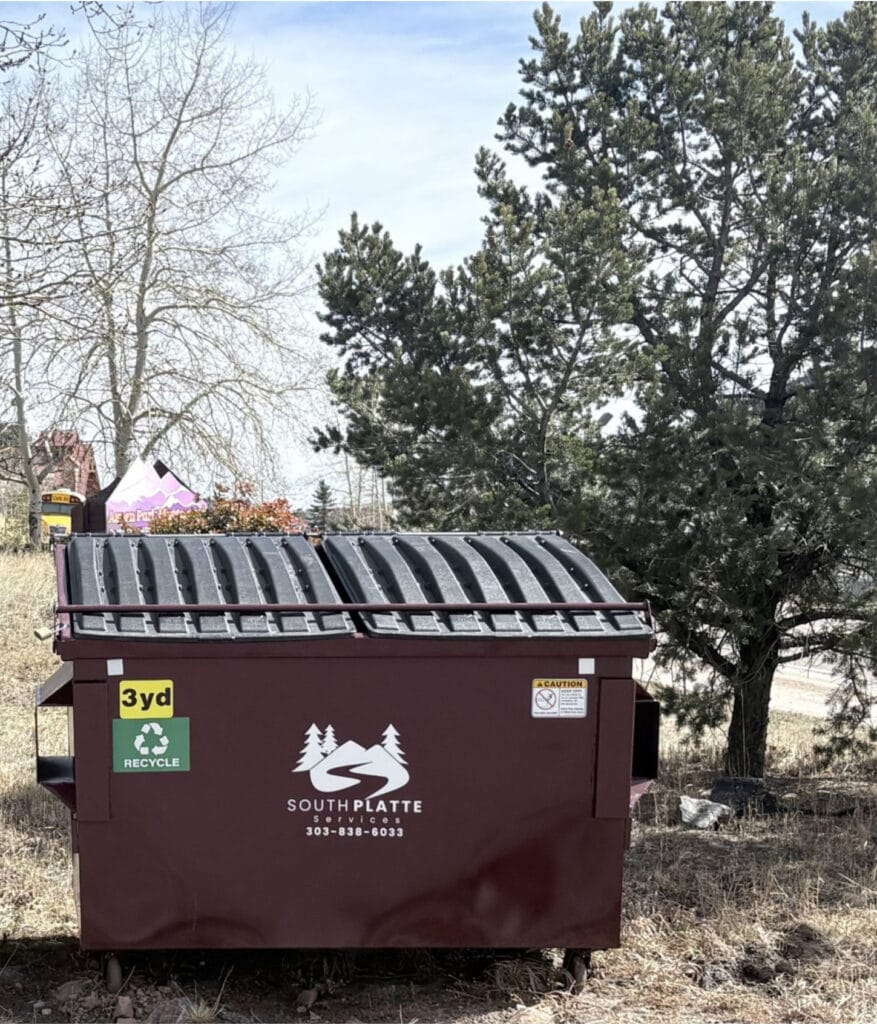
Commercial Dumpster Sizes
Most commercial customers use:
- 2-yard dumpsters for smaller retail or office properties with lower weekly waste volume
- 3-yard dumpsters for moderate commercial waste volume
- 4-yard dumpsters for higher-volume retail, multi-tenant properties, or busier commercial sites
- 6-yard dumpsters for restaurants, larger properties, or operations with significant daily waste
Getting the size right matters more in the foothills than it does in flat commercial areas. Enclosure space, truck access, and serviceability are often tighter, making container changes more disruptive than they would be on a typical suburban property.
Pickup Frequency
We offer weekly, every-other-week, twice-weekly, and three-times-weekly service depending on what the property needs.
Restaurants and higher-volume properties often need more frequent pickup than standard weekly service. The right pickup schedule helps prevent overflow, reduces wildlife pressure, and keeps enclosure areas manageable.
In a mountain tourism community, waste volume often shifts throughout the year. Summer visitors, holiday traffic, fall tourism, and special events can all affect how quickly containers fill. We can adjust service as those patterns change.
What Makes Commercial Service Different in the Foothills
The most common reasons commercial customers switch providers in Evergreen are missed pickups, blocked enclosure access, and service plans that never fit the property correctly in the first place. These aren’t random service failures. They’re predictable problems on mountain commercial properties that often begin long before the first missed pickup.
Commercial properties in the Bergen Park corridor often face different access challenges than properties closer to downtown Evergreen and the lake area. Retail centers with shared enclosures, tighter parking lots, higher seasonal traffic patterns, and more constrained service areas require a different approach than many standalone commercial properties. While the waste stream may be similar, access, snow storage, and enclosure layouts often vary significantly from one property to the next.
Many commercial enclosures in foothill plazas have tighter approach angles, limited maneuvering room, and more restrictive layouts than suburban properties. A dumpster enclosure that appears accessible on a site plan can become difficult to service once winter conditions arrive or surrounding uses change.
Most winter service interruptions aren’t caused by snow falling during a storm. They’re caused by snow storage after the storm. When plows push snow against enclosure gates or block the truck approach path, service becomes difficult or impossible regardless of road conditions.
Keeping enclosure areas clear of snow blockage is one of the most important things a commercial property can do to maintain reliable winter service. We coordinate access expectations with customers before winter conditions arrive rather than trying to solve those problems after routes are already affected.
Route reliability matters too. Icy grades, narrow approaches, and changing winter conditions affect commercial routes the same way they affect residential routes. We’d rather communicate a timing adjustment proactively than leave a property without service and without explanation.
“These guys will set up automatic inspections and pumping based on their findings, couldn’t ask for better service!!” – Derek S
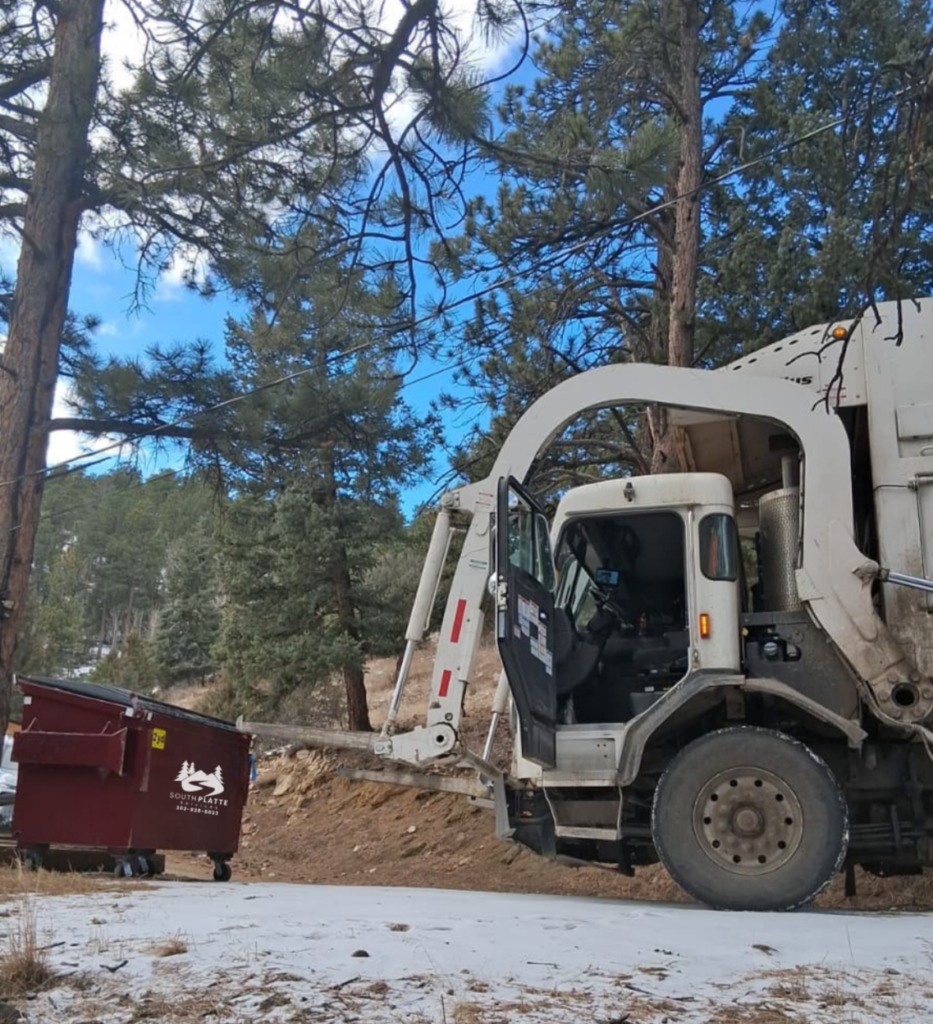
Service Setup
Commercial service is month-to-month. No long-term contracts required.
When setting up a new commercial account, we typically look at enclosure dimensions, gate access, truck approach, turnaround space, waste volume, pickup frequency, and winter access conditions.
We’ve seen enclosure gates that can’t fully open once snow arrives, layouts that leave little room for trucks to safely service containers, and properties where access problems were never identified until service became unreliable. Depending on enclosure layout, clearance, approach angle, and servicing conditions, some properties are better served using rear-load collection rather than traditional front-load service. Small decisions during setup often determine whether service remains predictable throughout the year.
Getting those details right at the beginning is usually far easier than correcting them after routes begin.
Wildlife and Commercial Properties
Wildlife pressure is a real consideration for commercial properties near open space in Evergreen.
Overflow around enclosures, unsecured lids, and gaps in pickup frequency all create wildlife exposure, particularly during warmer months when bear activity increases. For restaurants and food-service properties, this is worth taking seriously as part of routine enclosure management.
On apartment properties, HOA-managed communities, and multi-tenant commercial centers, reliable service often depends on more than truck access. Overflow left outside containers, enclosure doors left open, improperly placed materials, and inconsistent tenant practices can create ongoing service and wildlife issues. Clear expectations among tenants usually prevent most of these problems.
For HOA-managed communities and apartment properties, waste service is often as much a communication issue as an access issue. Overflow, improperly placed materials, and inconsistent use of enclosure areas can quickly become resident complaints. Clear expectations and a service plan that fits how the property actually operates usually prevent most of those problems.
Frequently Asked Questions
What commercial dumpster sizes do you offer?
We provide 2, 3, 4, and 6-yard containers depending on waste volume, enclosure space, and property type.
How often can you pick up?
Weekly, every-other-week, twice-weekly, and three-times-weekly service depending on what the property needs.
Do you require long-term contracts?
No. Commercial service is month-to-month.
What if my property has tight truck access?
Tight enclosure approaches and limited turnaround space are common on foothill commercial properties. We evaluate those conditions during service setup and develop a service plan around them.
What if my waste volume changes seasonally?
That’s common in a mountain community. Pickup frequency can be adjusted as seasonal traffic and occupancy change throughout the year.
Do you service HOAs and apartment properties?
Yes. We regularly service HOAs, apartment communities, and multi-family properties throughout Evergreen and the surrounding foothills.
Do you offer rear-load commercial service?
Yes. While many commercial properties use front-load containers, some foothill properties with tighter access, enclosure limitations, or unique servicing requirements may be better suited for rear-load service.
Start Commercial Dumpster Service in Evergreen
Setting up commercial dumpster service in the foothills is usually straightforward once the property layout, enclosure access, and waste volume are understood.
Most commercial customers who call us already have dumpster service. They’re dealing with recurring missed pickups, communication issues, enclosure access problems, or service plans that never fit the property correctly in the first place. Our goal is to make the transition straightforward and keep waste service from becoming something the property manager has to think about every week.
After more than 50 years working in the foothills, we’ve found that most commercial service problems are easier to prevent during setup than they are to solve after routes begin.
South Platte Services provides commercial dumpster service throughout Evergreen, Conifer, Bailey, Pine, Morrison, and surrounding foothill communities.